Apple Varieties
Here we are having just completed our 40th harvest at The Apple Farm. We finally have enough years under our belt to make a stab at describing the 40 or so varieties that we have growing here. Several people have offered their input, complete with humor and the occasional snide remark. Since opinions and resources are often in conflict, we put a distinctive Northern California (Apple Farm) twist on traditional descriptions. We hope you enjoy perusing this list and we invite comments if you have a take on a particular variety. Also realize that the list is ever evolving.
~ Tim


CIDER APPLES
KINGSTON BLACK ES X
Origin: England around 1820
Famous cider apple. Reputed to be the BEST single variety for cider. We found it to be YUCKY. It has potential for blending with sweeter ciders. Either Californians have not developed an English pallet (hopefully never will) or it’s an entirely different cup ‘o tea here in CA. Definitely a spitter if you take a bite.
REDFIELD
CRABAPPLES
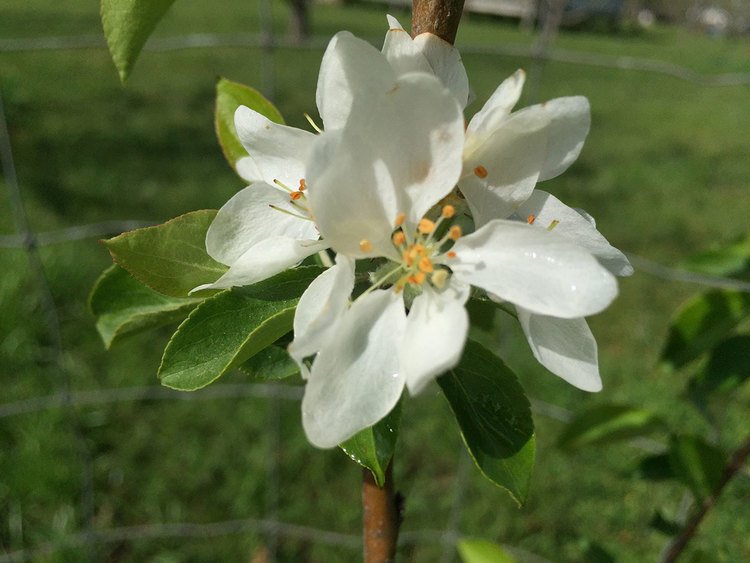
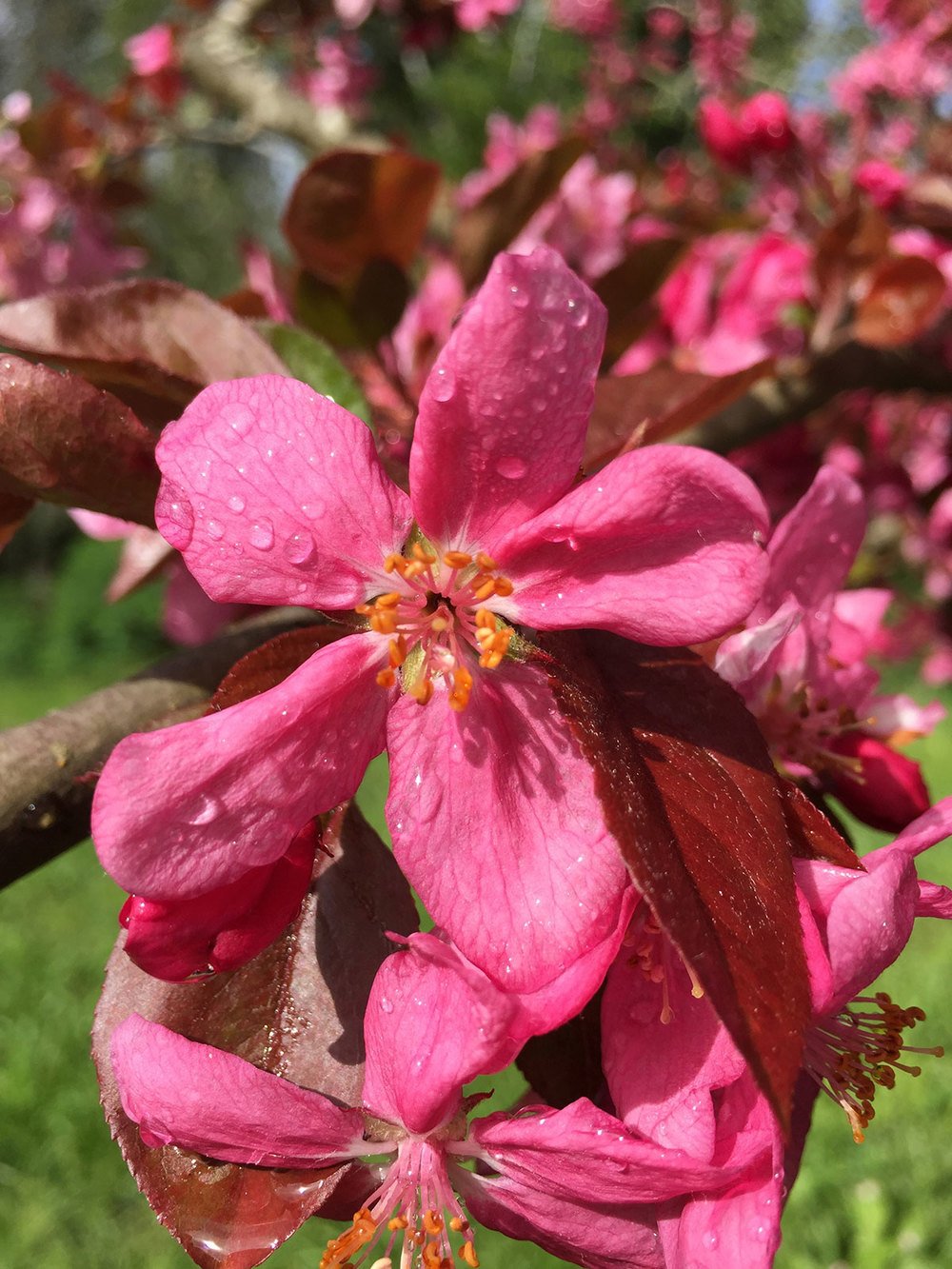
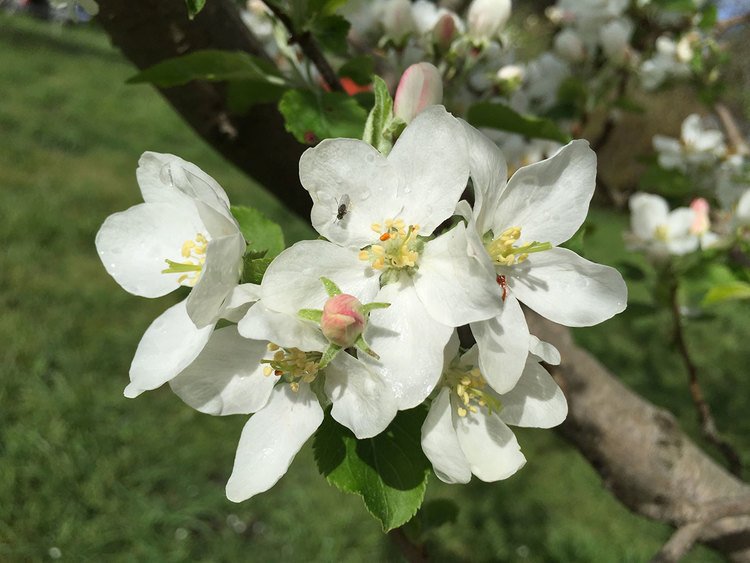
CRABAPPLES LJ-LA **
Dolgo, Transcendent, Red, Purple
These little cuties pack a punch! Traditional homestead tree for pickles, jelly, and spicing up sauce. Adds considerable acid and body to hard cider. Fresh eating for the brave!
HEWE’S VIRGINIA CRAB
APPLES

ARKANSAS BLACK MO **
Origin: Benton, Arkansas, around 1870
Possibly a seedling of Winesap with a very deep purple red coloring. Very crisp, coarse flesh with sharp flavor. It is an excellent keeper whose flavor actually improves with some storage. Also a good cider apple.
ART’S APPLE MO **
Origin: Philo, California, 1970’s (or earlier?)
A Local seedling from Art Gowan’s Orchard, down the road apiece. When Art died, the kids named his favorite seedling after him. A late, crisp and tart treat. One of our favorites (Sophia’s and Rita’s absolute numero uno).
ASHMEAD'S KERNAL ES **
Origin: England, 1700
This is what an apple was like three hundred years ago. The fully russetted skin makes a fine nutty package for the intensely flavored flesh. This little apple is still winning taste tests in England, and for good reason. Very good for cider.
ASTRACHAN (RED) EJ **
Origin: Russia/Sweden/England (1814)/U.S. 1835 or so.
The continuing popularity of this apple is amazing. Most people spit this one out as it is very tart and way too early (Late June, some years) for American palates (still eating cherries, apricots, and just starting on peaches) BUT...this apple makes THE best sauce or puree and great pies. It is not crisp and does not keep long. A wonderfully curious anomaly. Amuse your friends and amaze your enemies!
BALDWIN MS *
Origin: Mass., 1874
Flesh firm to coarse. Flavor sweet to crisp. It was once the most planted variety in New England but its reign over the landscape ended in the terrible winter of 1934 in which tens of thousands of trees perished. This gave way to the new king of the day, McIntosh.
BELLE DE BOSKOOP MS **
Origin: Holland, 1852
These large apples are greenish-yellow with a beautiful red-orange blush on sun kissed fruits. Behind the russeted skin is the crisp, dense, tangy, highly aromatic flesh. Great for fresh eating, cooking and adding a complex tart element to fresh or hard cider. A Karen favorite!
BLACK OXFORD UNK*
Origin: Oxford Co. Maine 1787
Can be a dark, dark red nearly black skin. Flesh whitish and firm. Subacidy, firm, moderately juicy. Does not cook well!! Yet John Bunker (Maines premier apple historian and author) claims it makes the very best apple puree to go with his morning breakfast!! Go figure. Have heard it won’t do well in California. Oh well, We are still waiting to find out in ’26.
BLACK TWIG LO ***
Origin: Benton, Arkansas, around 1870
Possibly a seedling of Winesap with a very deep purple red coloring. Very crisp, coarse flesh with sharp flavor. It is an excellent keeper whose flavor actually improves with storage. An excellent cider apple.
BLUE PEARMAIN UNK *
Origin Probably Massachusetts around 1800
Usually large with irregular roundish shape. Striped, reddish with blue blush. Slow to bear—we only have one 6 year old branch and so far no fruit ’26. Reportedly medium firm with sub acidic notes and aromatic (like we like it). Have tasted some very good ones many years ago—so we wait patiently for our own fruit.
BOONTANG LO
Origin: probably Pt. Arena, Ca. but who knows.
Came with a large nursery order back in the 20’s ought. We named it as a juvenile joke and because of it’s extremely zingy bite. Nothing else like it. Not much of a producer and some years next to nada. A rare treat.
BRAEBURN EO *
Origin: New Zealand, 1952
Another great introduction from down under. Crisp, sweet and tart, it has gained many fans. Late season apple good for fresh eating. Makes fabulous pies.
BRAMLEY’S SEEDLING ES **
Origin: England, 1813
From a pip in a pot to England’s favorite cooking apple. The East Bay/Great Britian clatch gets a crazed look in their eyes and starts salivating when this one comes into season. This large green apple has an extreme tart flavor. Great in applesauce, pies and adds a sharp component to a too-sweet cider. We’ve been adding trees for several years…it’s that good
BROWN’S CIDER
BULMER’S NORMAN
CAMPFIELD
CANADIAN REINETTE
MS Origin: Probably France but uncertain.
Large roundish. Pale yellow green. Fairly acidic, firm but not too crisp. Fits what we have except described as covered with russety spots—-haven’t seen that. Wood from young folks in Covelo, Ca many years ago… their mom’s favorite. Well we find it rather flavorless and mostly goes into our juice for the acidic bite. Just have the one grafted tree—-it is rather pretty though.
CHERRY COX MS *
Origin: Denmark, 1950
A “sport” of the famous Cox Orange Pippin, but redder and harvested much later. Flavor nearly as good as its parent, but it keeps a lot longer.
CHISEL JERSEY
CINNAMON SPICE MS *
Origin: Bolinas, Ca. “Discovered” probably in the 1970’s
Named for its cinnamon-like flavor (usually undetectable by us---maybe if you close your eyes and…) A favorite on California’s North Coast. Smallish very red fruit. Stays crisp for a while.
CLIFFORD UNK*
Origin: Virginia around 1998
Below medium in size, depending red with deep red flesh. Kind of mealy. Only had one apple so far by ’26 and most def mealy. Haven’t decided yet if only good for cider—not too promising so far.
COE’S GOLDEN DROP UNK X
Origin: England around 1842
Crisp yellow flesh is juicy and vinous (wine-like). Smallish, but packs a sweet, flavorful punch. Stubborn grower and supplier at our farm and after 20 years we haven’t nailed down harvest dates or harvested more than 40 lbs…but we love the name and recommendation from Michael Rose.
CONNELL RED MA **
Origin: Wisconsin, 1957 but shrouded in uncertainty
The best of the early season fresh eating apples (though maybe rivaled by Kerry Irish Pippin…you decide)! Smaller fruit with a delightfully crisp and refreshing taste and aromatics. Yellowish-white covered with red striping. Our apples do not match historic descriptions and we’re reconsidering its identification.
CORTLAND MS *
Origin: New York, 1915
Oft requested by Mid-Westerners as their favorite, this McIntosh cross does not seem to be as described (tart, tangy flavor, etc.) but is decent most years. Beautiful purplish blush and usually crispy.
COX ORANGE PIPPIN LA *
Origin: England, 1830
Regarded by the English as the finest flavored fresh eating apple. Medium size conical fruit with a dull orange finish. Tart, complex, distinctive flavor and incredible aroma. Great for fresh eating, cooking, pies, and cider.
CRIMSON GOLD LS *
Origin: Humboldt County, California around 1920’s
A recently rediscovered Etters Gem. Tart, crisp, complex, and beautiful to boot! Makes a great fresh cider. Buy for the looks, come back for the taste. Quickly sells out.
CRISPIN
DABINETTE
DUCHESS OF OLDENBERG LJ *
Origin: Russia 1700/England 1817/U.S. 1835
Very early cropper here---a favorite of Blackbirds and Jays for it’s bright red color. Lightly crisp and very fruity. To be eaten right away—does not keep. Originally bought for the name and because it reminded us of Bo Diddly’s beautiful sister who often went on tour (check out the Animals version).
ELLIS BITTERS
ENGLISH GOLDEN RUSSET
ETTER’S GOLD EO *
Origin: Guess who and when
Most years it’s pretty tasty and crisp. Slow to produce for us—thought it was maybe not worth growing here. Revised opinion: got better and became a steady producer over the years ’26
FALL PIPPIN MA *
Origin: Virginia, 1806
An early pippin very similar to Newtown Pippin but coming much earlier in the season. It is a favorite tart green cooking apple.
FIRESIDE MS *
Origin: Minnesota, 1943
A McIntosh descendent and parent of Connell Red. Often large with a definite fiery orange glow. Crispy right off the tree and usually quite tasty with subacidic fruity overtones.
FOXWHELP ES *
Origin: England 1800s
Probably not the original descendent any more, though the name has been carried on by numerous California nurseries and farms (Re: the name). Fun to grow but produces lightly. A bittersharp cider variety that did not turn into a dessert apple at our farm. Definitely for hard cider or someone who digs unusual harsh flavors.
FREYBURG MS *
Origin: New Zealand, 1934
Cox Orange Pippin and Golden Delicious cross (great idea). Trees are still young and the fruit is promising so far. Juicy, aromatic, acidulous, and sugary. A hint of licorice? Bananas? Maybe.
FUJI LS *
Origin: Japan, 1962
We were told in the earlier days that a buyer would buy all the Fujis I could grow so I started grafting over a few trees and ordered some from a nursery. The buyer moved on and we were not enamored with the flavor---but it is definitely a favorite to many pallets. We’ve come to like it more and more as the trees matured. Crisp and not too complex, but pleasing and excellent keeper.
GLOCKENAPFEL LO*
Origin Switzerland then Sweden then to U S in 1939 whew! Kinda bell shaped (glocken means bell in German (or Swiss?). Not much info, but we are enjoying them. Flesh very white, subacid and crisp.
GOLDRUSH LS *
Origin: Perdue-Rutgers-Illinois Co-op, 1992
The freshman in our lineup and we are sure it is going to go far. Flesh is very firm, with a tarty, winey, clean edge and effervescence on the tongue. Most specimens have golden flecks on their skins, hence the name. Great keeper and a customer favorite.
GOLDEN RUSSET ES *
Origin: New York, prior to 1845
An old American cider apple. Fully russeted skin with a sugary dense flesh. Historically this apple was often mentioned and rated higher than the similar Roxbury Russet.
GRAVENSTEIN EA ***
Origin: Germany or Denmark, 1790
An outstanding summer heirloom apple, renowned in the Sebastopol area before the great grape plantings. Don't wait when you see them come in. They don't keep well and will disappear before you know it. Thin skinned, juicy and acidic, the Gravenstein lives up to its reputation as a perfect pie and sauce apple.
GRENADINE MS *
Origin: Humboldt Co., Early 1900’s
Yep, another Etters composition and a (very) pink fleshed creation. This one is quite late compared to Pink Pearl. Only one tree so far but fruit is sharp and pleasing. Beautiful pomegranate like interior. We will probably grow some more.
HANNER’S BEST MS *
Origin: Oregon, 20th Century
A tree given to me by Winkler’s Nursery in the early 90’s was tagged as Hanner’s Best and claimed to be a very large fruit. Apparently from the Hanner Ranch in Oregon (which my neighbor Jim Gowan says he visited in the 80’s—so it probably exists or existed). Sure enough this apple has won the largest apple at the County Fair at least 6 years in a row, especially since a Wolf River grower has stopped entering (whew). Fruit is not too crisp and has a pleasing non-acidic flavor. Been told it cooks well too, we have NOT tried baking it yet. Either you love it or are amazed by it or intimidated by it’s size. Great red color, blocky, and lopsided. There’s more to this story… somewhere… help if you know more!
HAUER PIPPIN NOV or later *
Origin: California, 1890’s
Watsonville’s Hauer Ranch is the birthplace of this fascinating apple. Large, crisp, hard, LATE, juicy, tasty, tart and keeps practically forever. Will reportedly hang on tree until Xmas (I believe it!). Along with the Lady it’s also known as the Xmas Apple.
HIDDEN ROSE MS *
Origin: Oregon, 1980’s
Stories abound about this one. Probably “rediscovered” (so where was it “discovered?”) at the Newell estate in Willamette Valley by Louis Kimzey. The term Hidden Rose® once trademarked but time has expired (30 years?). I used to have to pay a fee to the owner! I could rant and rave about trademarking life forms, but I’ll spare you for now. The apple is smallish with beautiful purply/pink blushed yellow skin and deep pink inside. While not as flavorful as Pink Pearl, it is quite tart and pleasing.
HUDSON’S GOLDEN GEM EO *
Origin: Oregon, 1931
A fence row seedling introduced by the Hudson Wholesale Nursery. A large, conical fruit, don’t let the mud-like skin fool you, it’s a fine eating russet with crisp, juicy, sugary flesh and a distinct pear flavor.
JACQUI LS*
Origin: Kind of unknown. The Felix Gillette Institute discovered it on an old homestead in Nevada City, Ca. and named after the steward of the property Jacquie.
I swear it was sold to me many years ago as Jacqui, but now on FGI’s website it is Jacque’s Apple. The description fits so must be the same apple. Flavor mildly sweet and subacidic. Beautiful red flesh and tree so far growing well and productive.
JONATHAN MS-MO ***
Origin: Ulster County, NY, early 1800s
This is an apple that is both tart and sweet. Good out of hand when it is very fresh and crisp and a great baking apple when it starts to soften. Multiple pickings are required for size and color.
KATHERINE
Origin—Uncertain! 1923.
Rumored to be a seedling of Wagener and kinda looks like one they say. We liked the few we’ve had so far, but don’t have a Wagener to compare it to. ..yet. Has firm juicy flesh and fine flavor. Good for cooking
KERRY IRISH PIPPIN MA **
Origin: Ireland (that was our guess, too), 1802
First great apple of the year! (…although we said that about Connell Red, too) Crisp, hard-fleshed, and tart with complex intriguing flavor.
KIDD’S ORANGE RED ES *
Origin: New Zealand, 1924
A hybrid of the famous Cox Orange Pippin. Orangey pink flesh with some striping over a pale yellow skin. Medium size with a curious conical profile. Sweet, tart, and very aromatic. Great for fresh eating and cider.
KING DAVID LS **
Origin: Arkansas, 1893
Probably a cross between Jonathan and Arkansas Black. A beautiful dark red apple with outstanding flavor. Often used in cider making. The flesh is yellowish, coarse, crisp, and tender. Word is out on this one…cider makers and customers are looking for and demanding it.
KING OF TOMPKINS COUNTY ES *
Origin: New York, Pre-1804
This smooth-skinned large apple is good for cooking and fresh eating. We also use it for our apple juice, harvesting from our neighboring friends’ property at Russell Ranch, with trees close to a hundred years old. Water core (translucent pockets in the flesh) concentrates sweetness and is almost guaranteed in our area.
KING SOLOMON MS *
Origin: Georgia, pre Civil War (or post WWII Humboldt Co)
Probably a sibling of Arkansas Black. Named by Ram Fishman at Greenmantle Nursery in the 70’s? From a seedling that old timers remember getting scionwood from. Good folklore. At our farm the fruit is often very large with a beautiful, spotted, deep purplish skin. It has an indescribably distinct flavor, slightly sub-acidic and crispy when fresh.
LADY LO *
Origin: France, 1600
Also known as Pomme d'Api or the Christmas Apple, it was grown by Louis XIII in his orchards. Crisp white flesh with an intense almost citrus-like flavor. This tiny apple is beautiful with its red-over-green markings making delightful leaf patterns on the skin. Will hang on the tree for months. Here it tends to lose quality by Xmas. The birds come around for them at around that time.
LADY WILLIAMS LN*
Origin: Australia 1949
Someone brought some to a scion wood exchange in February saying they had picked it just the week before. Intrigued, I tasted it and it was very good and still crisp and crunchy. I got some wood and grafted a branch—-then we started a couple in our nursery. Well the branch is still producing but we’ll be damned if those starts and another attempt all did not survive in the orchard. Gonna keep trying. Definitely hangs on the branch until December. Maybe we should just graft branches, I’m thinking. Known to keep until April-May. My friend Steve is using it for breeding in hopes to get a very late apple that will keep until the first summer apples come along. Let’s hope.
LEICESTER*
Origin: Massachusetts 1846.
Had to have this as I spent some time in Leicestershire England (pronounced Lestershur there). Was definitely surprised to find it was from Mass. So far just a branch grafted but we are getting good fruit from the second year. Fruit rather large with tender sweet rich flavor. Good for dessert and kitchen use.
LIMBERTWIG LO*
Origin: North Carolina or Virginia 1829
Name definitely refers to thin wispy branches which head down as the fruit grows. Juicy with a pleasant flavor. Fairly deep red flesh and medium in size. Our jury still out on this one (just one tree) and difficult to know exactly when best to pick. Definitely a favorite in the South.
MACOUN MS *
Origin: NY, 1923
McIntosh descent. Firm, aromatic, and white fleshed. Here it has a smallish, deep red color. Much beloved by a boisterous SF actor whom we have dubbed Mr. Macoun.
MAJOR LS**
MARECHAL
MCINTOSH LA **
Origin: Ontario, Canada, 1798
A classic apple from the east coast, also the parent apple of Cortland, Empire, Macoun, and Spartan. Great flavor, very juicy and aromatic. Easterners are happy to see it in the market, but quick to say that it pales in comparison to those grown in their original cold climate. This ain’t Vermont. West Coast Macs ripen early and do not keep real well. Eat them quickly.
MELROSE MS **
Origin: Ohio, 1944
The official Ohio state apple fits well among our California buckeyes. Large fruit with yellowish-green skin streaked dark red with russet spots. Good for cooking and pies; fresh eating improves with storage.
MORGENDUFT *
Origin: England (???) 1819
German for Hoary (whitish, frosted) Morning. Very fruity flavor and crunchy most of the time. “Interesting” is all we can say.
MUSCADET D’ BERNAY
MUSCADET D’ LENSE
NEHOU
NEWTOWN PIPPIN EO *
Origin: New York, 1859
Three nearly full-grown trees have yet to give any sizable crop. It is the essence of a pippin---tart, firm, green, sprightly aromatic flavor. Great for pies and stores well.
NICKAJACK UNK X
Origin: Nickajack Creek: Macon Co. North Carolina, 1852 more or less
Love the Name. Just planted here in 2014, so no local news yet. Over 20 “other” names—Red Warrior, Carolina Spice, Winter Horse, World’s Wonder, Cheataw---gotta love all that! Supposedly good for pies, drying, and hard cider. Let’s find out…someday.
NIEDWETZKYANA LA X
Origin: Kyrgystan, who knows when or where?
Deep, deep red skin and even deeper red flesh. Largish. VERY tart here, but with a tolerable sweetness that is gratifying to experimental pallets. Incredibly beautiful tree, but it has been stubborn to produce much of a crop so far.
NODHEAD
NORTHERN SPY EO **
Origin: New York, 1800
Slow to bear, but worth the wait. The consummate pie apple according to many Easterners “ain’t nuthin like no spy pie.” Juicy, sweetly tart, and high in vitamin C, it is wonderful out of hand. Slipping from sight very quickly as it is both alternate bearing and easily bruised. Be gentle.
NORTHFIELD BEAUTY
ORANGE PIPPIN LA **
Origin: Heck, we don’t know
Not a true pippin but just as good. Local lore says it was originally called Flat Red. Tim Bates says, “Hey, it’s not round.” Very nutty and tart. Good for cooking and balancing sweeter ciders.
PALADAY BOUQUET MA *
Origin: Unknown
From one of two known trees in Philo. Eat right away for their crisp and perfumed flavor. Name originates from Mrs. Bryan in the late ‘70s.
P. G. GOLD ES *
Origin: Apple Farm, Philo, California Seedling named, Late 1980’s
An oddball in the Red Delicious block that no locals could put a name to. We began to sell it at the farmstand as a mystery apple. Great local artist Paula Gray loved it, so we named it after her. Dense and fruity with a hint of tartness. Looks a lot like the Hawaii apple but doesn’t taste quite the same---other Hawaii growers says it’s not…ok.
PHILO GOLD ES-EO ****
Origin: West Virginia 1890
Many of our oldest golden delicious trees were among the first planted in California. They have reached a maturity that sets them far apart from usual goldens, hence the change of name. You may never have had a fresh golden. Left unwaxed, their natural perfume comes through and the flavor and texture are wonderful. We find them to be great cooking apples, retaining both color and shape, as well as living up to their longstanding reputation for eating out of hand. We pick Golds throughout the season for color and ripeness.
PHYLO MYST
PINK PEARL MA ***
Origin: Humboldt County, 1944
An Albert Etters apple descended from an old English variety named Surprise. Crisp, tart, and aromatic with startlingly pink flesh. Pies and tarts are quite beautiful and slices hold their shape but cook up very tender. Early, and therefore not a good keeper, its fleeting presence is not easily forgotten.
PRIDE O’ PHILO LO **
Origin: Discovered at the Apple Farm, late 1980s
From a branch on a tree in the lower orchard. No one knows it, so we got to name it. Late, largish, with a well balanced tartness. We love it and you will, too!
RED DELICIOUS MS *
Origin: Peruk, Iowa Around 1800
These are California Red Delicious. We had several varieties, from striped to solid, when we bought the farm, and saved the best tasting striper (probably a Starking—yeah, the Stark Bro’s again). If you find them fresh, sweet, and crisp then you will know they are locally grown and in season.
RED GOLD ES *
Origin: Washington, 1930s
Very sweet, low-acid apple with yellow flesh. Eat these right away as they do not keep. For the here and now. They do dry very well though.
REVEREND MORGAN
RHODE ISLAND GREENING LA **
Origin: Greens End, Rhode Island, 1600s
An old favorite cooking apple that many people remember. It is quite tart with dense flesh and does not shatter in pies. It has often been marketed as an early pippin, but it has its own characteristics.
ROXBURY RUSSET ES *
Origin: Massachusetts, early 1600s
Possibly the first apple developed in the New World. A fine cider apple with firm, coarse flesh. Equally suited for cooking and eating out of hand, these russets are a real treat.
SALOME
SAM YOUNG
SHASTA SWEET
SHASTA WILD
SIERRA BEAUTY EO ****
Origin: Northern California, about 1900
This apple is native to the Anderson Valley and a great favorite. It is large, crisp, juicy, and very tart with a great snap. It also has excellent cooking and keeping qualities.
SOP’S ‘O WINE
SPITZENBURG (ESOPUS) LS **
Origin: Hudson Valley, NY, Late 1700s
Reputedly Thomas Jefferson's favorite. Firm yellow flesh, aromatic and sprightly subacid. A connoisseur's apple unique and unexcelled in flavor and texture. Great dessert apple, bakes well and is a good keeper
SPLENDOUR MS ***
Origin: New Zealand, 1948
Beautiful rose colored apple. Sweet and crisp with low acid. One of our best keepers. In New Zealand it is considered the Prince of Apples. The Stark brothers named it Starksplendor but they gave up the patent because they thought the apple wasn’t good enough. Bad Call, guys.
STAYMAN WINESAP LS *
Origin: Kansas, 1875
A seedling of the original Winesap. It has the same winy character, but with a little extra something (like a longer name). Good fresh, cooked, or pressed. Keeps well.
SWAAR LS *
Origin: New York, 1804
Dutch settlers named it Swaar, which means “heavy”. The dense and firm flesh carries nuttiness and rich aromatics. Experiencing this apple will prove its name and storage will improve its flavor.
SWEET TANGO
SWEET 16 MS *
Origin: Minnesota, 1978
Aromatic, sub-acidic, firm, and crisp with a high sugar content. Unique, faintly nutty flavor with hints of banana and licorice (LL). After all those adjectives all we can say is it’s a damn good apple.
TOM PUTT
TREMLETT’S BITTER LA X
Origin: England, late 1800’s
Classic English bittersweet cider apple, but blended with sweeter ciders it has real potential. Eat straight at your own risk—extremely tart…and of course, BITTER.
TURTLEBACK
TYDEMAN RED EA *
Origin: Kent, England, 1964
A McIntosh type. Earlier (if you just can’t wait) with a bright red skin and firm, crisp, white flesh.
URALIA BUTTER
WADE’S WONDER
WILLIAM’S PRIDE
WEALTHY LA *
Origin: Minnesota, 1860
Good early all-around apple. Very colorful red striping on greenish/yellow skin. Flesh is sprightly, vinous, and distinctive. Keeps well for an early apple and is good for baking and fresh eating.
WESTFIELD SEEK NO FURTHER LS *
Origin: Massachusetts, 1796
This one does not live up to descriptions most years—it probably needs more chill factor than we get. But every few years (colder winters?) it is crisp, fruity, sub-acidic, and aromatic. Great name, so of course I had to have it—just one tree.
WHITE WINTER PEARMAIN LO **
Origin: One of the oldest extant English apples, 1200 (or so)
Firm, crisp out-of-hand apple. Once very popular in Napa Valley. Also well adapted to coastal areas. Around the 1850s it was saddle-bagged from New York to the Midwest where it became popular.
WICKSON EO **
Origin: Humboldt County, 1944
Another of Albert Etters introductions, not well known, though word is getting out. Customers at the SF Market buy pounds every week to snack until the next market. It is named after E.J. Wickson, a famous California pomologist. The flavor has the zing of a crabapple but plenty of sweetness to balance it out. For such a tiny little apple it is very exciting, and one of our personal favorites (Polly’s absolute favorite). It also makes an especially fine cider.
WINTER BANANA LS **
Origin: Indiana, 1876
Beautiful pale creamy yellow with a delicate pink blush on the sunny side. Flesh moderately firm, sub-acid, and characteristically aromatic. Best as a fruit bowl or salad apple, for it is slow to oxidize.
WYNOOTCHE
YARLINGTON MILL UNK X
Origin: West Cadbury, England, 1800’s
Another highly acclaimed English cider apple that is not doing well here, even planted in my best soil. Have not had enough of a crop in 15 years to say anything about it…sorry.
YELLOW BELLFLOWER EO *
Origin: New Jersey, 1742
Beloved by old timers in No. California (once the most grown apple in the state). It has a vey distinctive shape and coloring. Apparently stores well and has various uses as it “mellows”. The tree grows very well, but I’ll be damned if I can get it to bear with any regularity.
YORK IMPERIAL EO *
Origin: York, Pennsylvania, 1830s
Fruit medium to large, lopsided, oblate, tending towards a rhombozoidal fashion. Firm, crisp, tender, juicy, yellowish flesh. One of the best old-time winter keeping apples.
ZABERGRAU REINETTE UNK X
Origin: Wurtenburg, Germany, 1885
Only one stubborn tree has survived with next to no fruit…so far. The jury is out until we know more. Supposedly a russetted apple with hardy, nutty flavor.
THANKS TO FAMILY AND FARMHANDS: Rita, Sophia, Polly, Jerzy, Lauren (aka El Caramel Kid)….and Karen. For input, output, loves and hates.
REFERENCES
We have shamelessly borrowed, stolen, and outright copied info and adjectives from the following sources (and noticed often when some of these sources did the same---all in the name of spreading the word):
FRUIT, BERRY AND NUT INVENTORY---Once was the most complete reference source out there…but now…
THE ILLUSTRATED HISTORY OF APPLES in the United States and Canada. Daniel J. Bussey and Kent Whealy. 2016 The Ultimate Encyclopedia of our times. 7 volumes each around 550+ pages! Thousands of varieties cited and explained in depth (well, when the info is available—-sometimes it’s only a nursery listing from 1800’s with no description, but often great names). Other times can be nearly a page on one variety. Has hundreds if not thousands of beautiful illustrations that were commissioned by the USDA’s Pomological Watercolor Collection from the 1890”s- 1920’s (when somebody out there cared about heritage apples).
TREES OF ANTIQUITY---Nursery sellers par excellent of about 50 of the varieties I grow.
GREENMANTLE NURSERY---Ram Fishman (may he rest in peace). This teller of great stories had a most excellent website (by golly it is still up, if you want a great read). He was the the No 1 keeper of the Albert Etter’s (read Pink Pearl, Wickson, etc.) Flame.
OLD SOUTHERN APPLES---Creighton Lee Calhoun, Jr. (A grand Southern name if I ever heard one) His tome is the best source for stories on the more “obscure” varieties.
GARCIA RIVER NURSERY---Nick King (may he rest in peace) started this little venture and grew starts from my own scionwood and we became close friends.
APPLE HILL ORCHARDS---I still have Russel Hill’s one and only catalogue from the 80’s. Nearly 300 varieties deeply researched. He named one of my seedlings Bates’ Seedling. I was too embarrassed so changed it to Pride O’ Philo. Thanks, anyway.
APPLES---Roger Yepson New renderings of dozens of classic apples—great artwork and often humorous tales about them.
APPLES OF UNCOMMON CHARACTER. Rowan Jacobsen. Rowan really loved his fruit and the stories that go with them. A very personal take and humorous to boot. I’m jealous of his writing abilities
And of course THE APPLES OF NEW YORK---It’s always good to have a Bible around…and those illustrations!! Volume III finally happened over 100 years later. See above—Illustrated History.
And…Burford and Bunker for inspiration and scions, M. Philips (for inspired perspiration), and now Rowan Jacobsen with a new book.